
Insuring and running an imported American car
Who insures it, what it drinks, who fixes it. Once registered, it is a UK car.
Once an imported car has passed its test, been registered by the DVLA and been given UK plates, the same insurance duty and the same MOT rules apply as to any other. What varies is the price and the availability of cover and parts. Insurers price an import one car at a time, and we do not quote insurance, so this guide sticks to what is fixed by rule and tells you what to ask where it is not.
Registered, taxed and insured, it is a UK car like any other. The legal position once the V5C is issued
Insurance
You must have motor insurance to drive on UK roads, and gov.uk says you must insure an imported vehicle before you drive it, whether it was shipped or driven in. Third party is the legal minimum. The cover has to come from an insurer authorised in the UK.
Settle the timing early. Driving an unregistered imported car on the road can lead to prosecution, other than to a pre-booked test, so ask each insurer when cover can start and whether they will quote against the VIN while the DVLA application goes through.
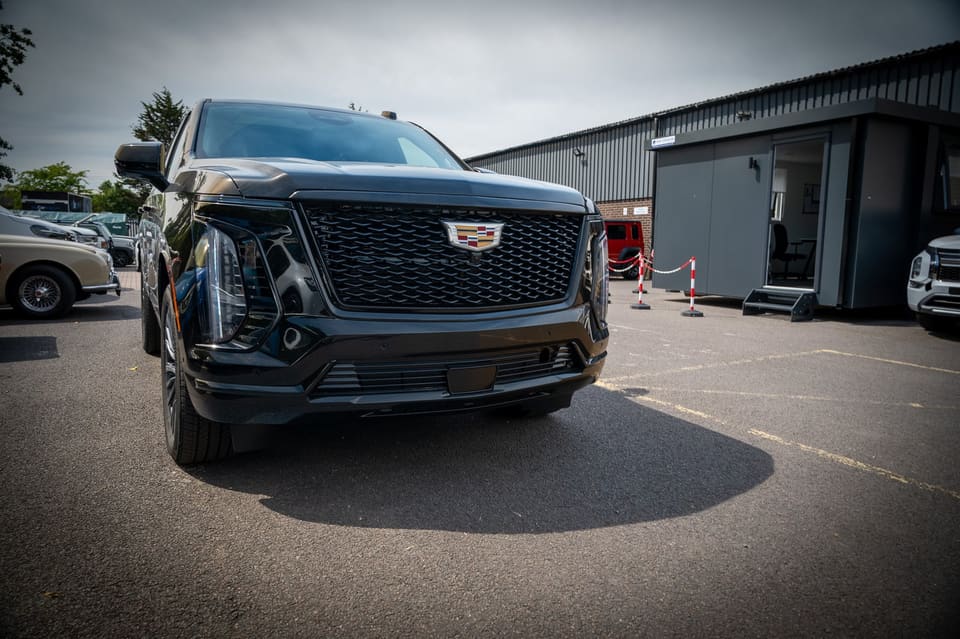
Once the car is registered, the DVLA checks its records against the Motor Insurance Database. The registered keeper of an uninsured car commits an offence unless the car has been declared off the road with a SORN. That applies to a car sitting on the drive as much as one in use.
Insurers ask for more detail on an import than on a UK car. Put the same details in every request so the quotes can be compared, and have these to hand:
- make, model, year and the 17-character VIN;
- the V5C, or the registration details once they exist;
- what was changed for the UK, such as the lighting conversion;
- how and where the car will be kept, and how much it will be used.
Whether a mainstream insurer or a specialist suits the car, and whether it can be insured for an agreed value, is a question for each insurer.
What stays fixed, and what moves
- Insurance
- Needed before you drive it. The price is the insurer's to set, so compare quotes.
- Road tax
- Rate depends on the car. A vehicle built before 1 January 1986 can stop paying from 1 April 2026, but you must apply for the historic tax class.
- MOT
- Annual once the car is over three years old. May be exempt when built or first registered more than 40 years ago and not substantially changed. The tax and MOT tests differ, so a car can qualify for one and not the other.
- London ULEZ
- £12.50 a day if the car does not meet the standard. Judged on declared emissions, not age.
- Clean Air Zones
- Private cars are charged only in the Class D zones, which are Birmingham and Bristol.
Emissions zones and an American car
US-market cars were not built to Euro standards, and an import often has no Euro standard recorded on its V5C. A car can then show as non-compliant even when it might meet the standard. TfL asks for evidence of the emissions values, such as a letter from the manufacturer, to contest that. For older cars there are historic exemptions, with their own dates and conditions, which do not line up exactly with the tax and MOT ones.
Check the actual car against the rules for the zone you drive in before you buy. The ULEZ guide goes through the checker, the evidence and the exemptions.
Fuel
E10 has been the standard unleaded grade in UK petrol stations since September 2021, and E5 super unleaded is still sold. Most modern petrol cars can use E10. Older cars, and those with carburettors, may need E5. The gov.uk E10 checker is a starting point, but it is built around cars sold in Britain, so a US-market version may not appear. Ask the maker or an owners club for the model, and if it is in doubt, use E5.
Day-to-day driving questions, such as sitting on the other side of the car, are covered in our left-hand drive guide.
Servicing and parts: ask before you commit
It depends on the model. A common one and a rare one are different propositions, and so are a ten-year-old truck and a sixty-year-old coupe. These questions settle it better than a generalisation:
- Is there an owners club or forum for this model in the UK? Members know who fixes what.
- Which parts are shared with other models, and which are specific to this one?
- Does an independent garage near you work on this make, or only on UK-market cars?
- What does the manufacturer say about a warranty on a car sold outside the US? Do not assume it carries over.
- Are the converted parts, such as lamps, standard UK items that any garage can replace?
Keep every record of the conversion work. Our guide to converting a US car lists the usual changes, and a garage or insurer will want to know what was done. Put the running questions next to the import ones: the costs page sets out what goes into an import, and the customs guide covers the duty and VAT. For the test and the DVLA step, see IVA or MOT and the registration page. Tell us the make, model and year when you ask for a quote and we will say which of these questions matter most for that car.
Quick answers
Can I insure the car before it is registered?
You must have insurance in place before you drive it. Ask each insurer when cover can start, and whether they will quote against the VIN while the registration is processed. Until the car is registered you can be prosecuted for driving it on the road, other than to a pre-booked test.
Will insurance cost more because it is an import?
It can, and it can also work out differently, because it depends on the car, its age, how you use it and the insurer. We do not quote insurance and will not guess a figure. Get two or three quotes with the make, model, year and VIN to hand.
Does my American car have to run on E10 petrol?
E10 has been the standard unleaded grade in the UK since September 2021, and E5 super unleaded is still sold. Older cars and those with carburettors may need E5. Check the manufacturer or an owners club for your model, and use the gov.uk E10 checker as a starting point, knowing it may not list US-market versions.
Will I pay the ULEZ charge?
It depends on the car. ULEZ is judged on declared emissions, not age, and a US import often has no Euro standard recorded. Cars built before 1 January 1973 are exempt, as are some over-40-year-old cars in the historic tax class. Check the car against TfL before you commit.
Does the annual MOT still apply?
Yes, once the car is over three years old, unless it was built or first registered more than 40 years ago and has not been substantially changed. In that case it may be exempt. A car in that position still has to be kept roadworthy.