
American pickups: weight, tax and vehicle class
Most UK rules for a big American truck depend on its maximum authorised mass, so find that figure before you buy.
On this page 9 sections
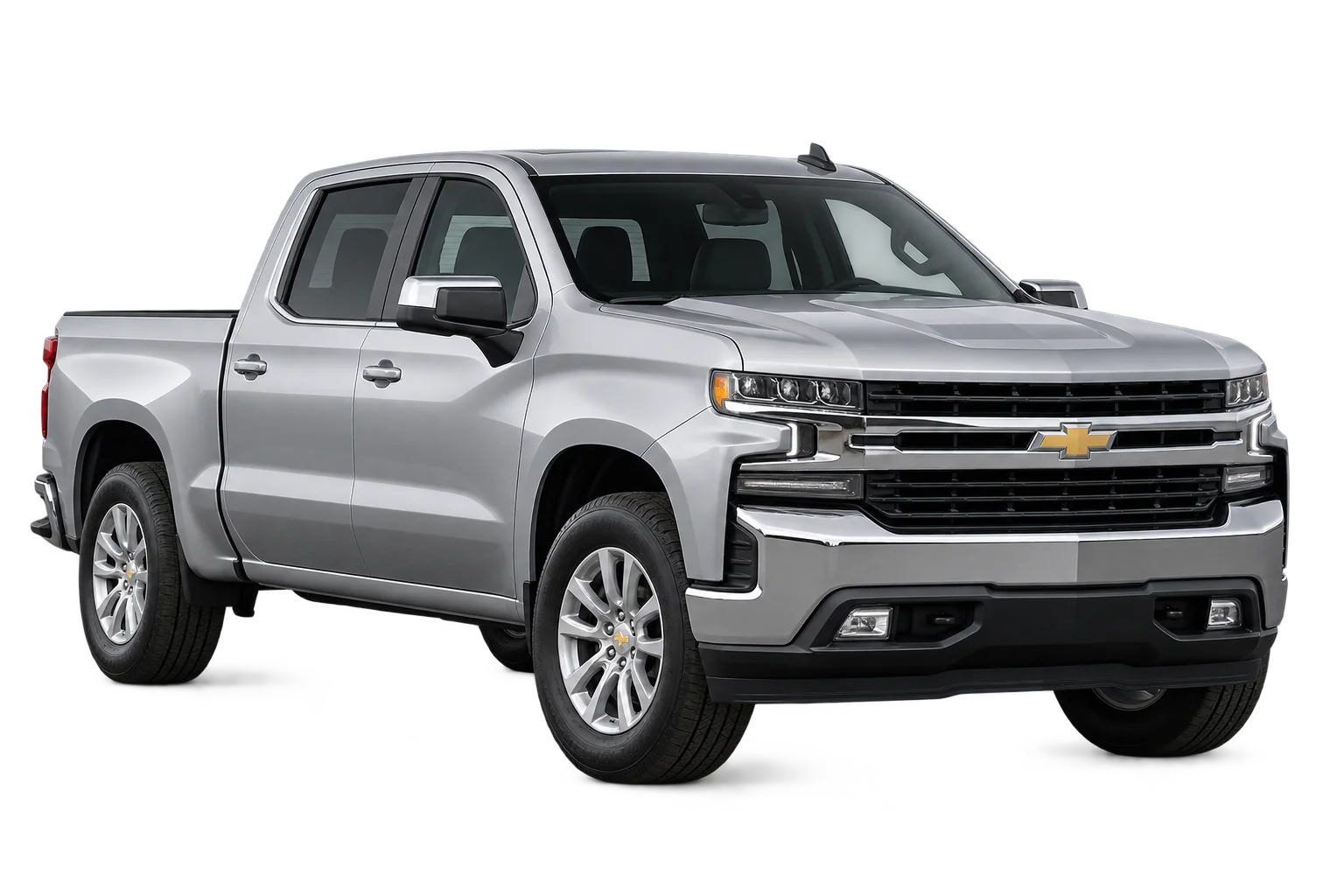
An F-150, a Silverado or a RAM 1500 is a lot of truck by UK standards. The rules that apply to it depend on one figure: its maximum authorised mass, the most it is allowed to weigh fully loaded. Under 3,500kg most things work much like a car, but above it the truck is treated as a different kind of vehicle for licences, approval and more.
- The line
- 3,500kg maximum authorised mass
- Licence at or under it
- Category B, for a licence passed on or after 1 January 1997
- Licence over it
- Category C1, for vehicles between 3,500 and 7,500kg
- Approval exemption
- Over 10 years old at or under 3,500kg, over 25 years old above it
Find the gross weight first
US trucks are sold by name and payload class, and the names do not tell you the weight. Two trucks with the same badge can carry different ratings depending on cab, bed, axle and engine. The heavier HD trucks are the ones to look at hardest.
The number you want is the gross vehicle weight rating on the label in the driver's door pillar. US labels give it in pounds as well as kilograms, so use the kilogram figure. Ask the seller for a clear photo of that label before you commit. It is the same advice as in our guide to checking a US car before you buy: the vehicle itself is a better source than the listing.
Which licence you need
A category B licence passed on or after 1 January 1997 covers vehicles up to 3,500kg maximum authorised mass with up to 8 passenger seats. That covers a pickup at or under the line. Towing is limited too: a trailer up to 3,500kg, with the truck and trailer together not over 7,000kg.
Above 3,500kg and up to 7,500kg you need category C1. If you passed your test before 1 January 1997 your licence may carry more, but gov.uk says to check your own licence details rather than assume.
For approval, a goods vehicle over 3,500kg is a heavy goods vehicle. It is exempt from approval only once it is over 25 years old, not 10. Other rules for heavier goods vehicles may also apply to how you use, test and drive it. Check them all before you buy one.
Car tax or light goods tax
Vehicle tax for a pickup depends on how it is recorded when it is registered. gov.uk has a separate class for light goods vehicles, TC39, for vehicles registered on or after 1 March 2001 and not over 3,500kg revenue weight. When we checked in October 2026 it listed a single 12-month payment of £360. Rates change, so check the current table.
A pickup recorded as a car pays car tax instead. We cannot tell you before registration which way a particular truck will go. The body, the seats and the payload all feed into how it is described.
Older trucks may not pay at all. A vehicle built before 1 January 1986 can stop paying vehicle tax from 1 April 2026, once you apply to move it into the historic class. Our 40-year rule guide explains how that date rolls each year.
Double cab pickups as company vehicles
For years a double cab pickup with a payload of a tonne or more was treated as a van for benefit in kind. That changed on 6 April 2025. HMRC now assesses the vehicle as a whole, and says most double cab pickups are expected to be classified as cars for the benefit charge, because they are as suited to carrying people as goods.
There is a transitional rule. Pickups bought, leased or ordered before 6 April 2025 can keep the old treatment until the earliest of disposal, lease expiry or 5 April 2029. HMRC also says the change does not affect VAT input tax or how vehicle tax is worked out.
If the truck is going through a business, ask your accountant before you buy. We import vehicles and do not give tax advice.
Customs: car or goods vehicle
The same question comes up at the border. HMRC classifies a double cab with permanent seats, seat belts and passenger fittings as a car. One built mainly to carry cargo, with fold-away seats or a fixed bulkhead, is a goods vehicle. The goods vehicle codes we checked also showed 10% duty, but HMRC says to get a ruling if you are unsure. Our customs, duty and VAT guide covers the rest.
The weight is on the label in the door pillar. Use the kilogram figure
Approval: M1 or N1
A pickup under ten years old needs Individual Vehicle Approval, the same as a car. The DVSA keeps separate IVA manuals for cars (M1) and for vans and light goods vehicles up to 3,500kg (N1), and heavier goods vehicles have their own manual again.
| Category | What it covers |
|---|---|
| M1 | Passenger vehicles with no more than eight seats besides the driver's |
| N1 | Vans and light goods vehicles up to 3,500kg, with six or fewer seats besides the driver's and a payload greater than the weight of the passengers |
| N2 and N3 | Heavier goods vehicles, under their own manual |
A crew cab truck can sit near the boundary, and the M1 manual lets some vehicles with a load area be treated as M1 at the applicant's request. Which manual a given truck goes through is something we work out with you from its seats, payload and weight. The test is done in our own lane either way, and our IVA or MOT guide explains what each route involves.
A pickup over ten years old and not over 3,500kg is exempt from approval and takes an MOT instead. The lighting work is much the same as for any US vehicle, which our conversion guide sets out.
Living with the size
A full-size truck is also long and wide for UK streets, and the practical questions are worth asking before it is on a ship:
- Check it fits on your drive, and that the bed clears the pavement and the garage door.
- Multi-storey car parks post height and size limits at the entrance. Check the ones you use against the truck's measurements.
- Supermarket and town centre bays were not drawn with a crew cab and long bed in mind.
- It is left-hand drive, which matters more in a wide vehicle on narrow roads. Our left-hand drive guide covers day-to-day life.
Measure your space, then compare it with the truck's published dimensions for the exact cab and bed.
The checks, in order
-
Read the weight label
Get the gross vehicle weight rating in kilograms from the door pillar.
-
Check your licence
Category B covers up to 3,500kg on a post-1997 licence. Above it you need C1.
-
Check the age
Under ten years means IVA. Over ten and not over 3,500kg means an MOT. Over 3,500kg, the approval exemption starts at 25 years.
-
Talk to your accountant if it is a business vehicle
Double cab benefit in kind changed in April 2025.
-
Measure where it will live
Drive, garage and the car parks you use most.
Where to go next
Put the truck's year into can I import it to see which route it takes, and run the numbers through the import cost calculator. Our import checklist keeps the paperwork in order. We only import clean-title vehicles, and from collection to plate it usually takes 8 to 16 weeks. When you have the weight label photo, send it with your quote request and we will tell you which route the truck takes.
Quick answers
Can I drive an American pickup on a normal car licence?
If its maximum authorised mass is 3,500kg or less, yes. A category B licence passed on or after 1 January 1997 covers vehicles up to 3,500kg with up to 8 passenger seats. Above 3,500kg and up to 7,500kg you need category C1. Check the gross weight on the truck, not the model name.
Is an imported pickup taxed as a car or a light goods vehicle?
It depends on how the vehicle is recorded when it is registered. gov.uk lists light goods vehicles (TC39) registered on or after 1 March 2001 and not over 3,500kg revenue weight at £360 for 12 months, checked October 2026. We will not promise which class a particular truck lands in before it is registered.
Is a double cab pickup a company car or a van for benefit in kind?
From 6 April 2025, HMRC expects most double cab pickups to be treated as cars for the benefit charge. Pickups bought, leased or ordered before that date can keep the old treatment until disposal, lease expiry or 5 April 2029, whichever comes first. VAT and vehicle tax are not affected by that change. Ask your accountant about your own case.
Does a pickup take the car IVA or the van IVA?
There are separate IVA manuals for cars (M1) and for vans and light goods vehicles up to 3,500kg (N1). Which one applies depends on the seats, the payload and the load area. A pickup over ten years old and not over 3,500kg is exempt from approval and takes an MOT instead.
What changes if the truck is over 3,500kg?
Quite a lot. You need a C1 licence or above, it is a heavy goods vehicle for approval, so it is exempt only once it is over 25 years old, and other rules for heavier goods vehicles may apply. Check all of them before you buy one.